Notesn#00.01
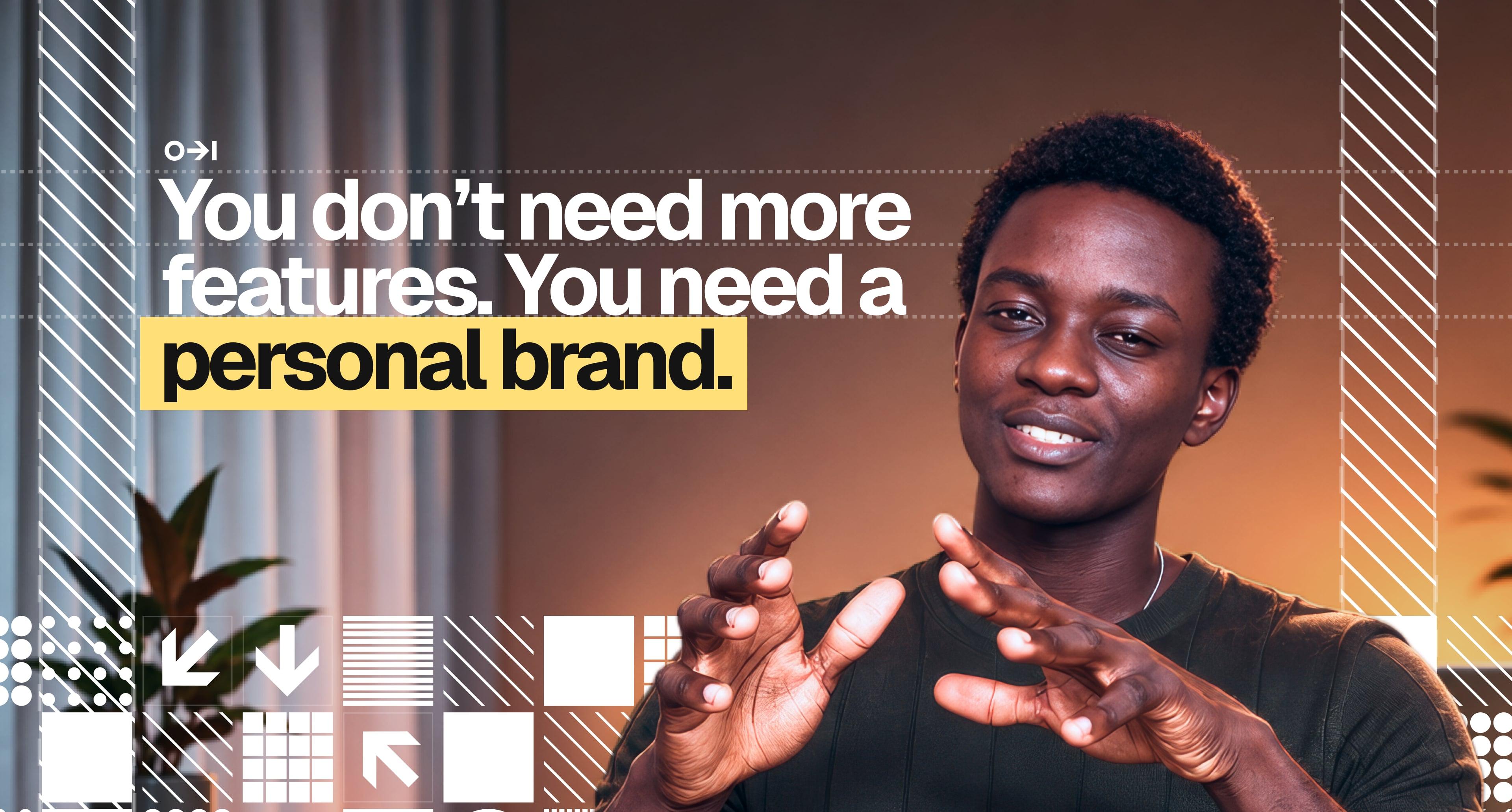
You Don’t Need More Features. You Need a Personal Brand.
This is what is going to happen to founders who don’t have a personal brand: they’ll get lost in the wave of products being pushed to market. And it’s why I also advice founders to focus less on building products and more on creating content.
For context, I have helped 30+ founders ship their first product to market and pitch to investors. And as a builder myself, I used to recommend designing new features and long-term product ecosystems.
But after shipping a few products in public over the last 7 years, I realized there was more to building a startup than just building a great product.
Truth be told, a lot of them didn’t need a better product. They needed a brand. A human, founder-led, personal brand.
I’ve noticed a major difference as well, between startup founders in tech and founders in, say, consumer packaged goods, or even stay-at-home moms selling million-dollar digital products. And I can tell you, as someone who’s very active in the tech build-in-public space, that the majority of tech founders are losing to the stay-at-home moms… and it’s because of one thing.
They don’t have a personal brand.
Before any investor, business partner or customer buys from you, they will look you up. And they’re going to find one or some of these three things:
A landing page for your product,
A social media account with fewer than 12 followers and no activity,
An online presence and portfolio of your thought process, results and failures
The third one builds trust. And it goes without saying: trust is why strangers would want to hop on a call with you or buy your product.
And it is becoming more important than ever, because now that anyone can push out a working software in less than a day, there’s a compounding influx of products that look and feel the same… which means there’s going to be both bad products and great ones.
How will your ICP tell you apart? How do you stand out?
So here’s my take:
For founders, content isn’t just a gimmick or marketing anymore. It’s proof of work, of existence, and of commitment to be visible and accountable to your customers.
AI can speed up automations and scale operations, but it cannot speak for or represent you. If you’re not building a personal brand, you’ll be stuck at the bottom with 90% of startups just like yours.
I also believe this: Whatever you’re making in revenue with a faceless brand or startup, you will ALWAYS 10x that revenue with your face on it.
I’ve been following this founder on Instagram for a while now. He runs an agency (just like me, although I’ve pivoted to a product studio), started with a group of friends (like I did), and the business itself isn’t that different from mine. It’s the same kind of clients, same kind of services.
But the difference? He shows up. Every week he’s sharing his wins, the client horror stories, the hiring mistakes, and what he’s learning as he goes. His personal account has grown faster than his agency’s page ever did, and I’d bet more of his deals start in his DMs than on his company’s website.
Nobody follows him for the services list. They follow him because they feel like they know him… and when they need an agency, he’s the first person they think of.
He’s not the only one. Take three of your favorite founders in the world, and compare their personal brands to their company brands. I guarantee that 9 times out of 10, their personal brand has a bigger audience than their company’s.
And it’s because they understand this one thing:
People follow who you are first, before they follow what you do.
And sometimes they may not be remotely interested in your product or service, but they follow you to see your journey, what you’ve been up to, or how you think. They want to know… YOUR story.
Stop worrying about people copying your product. It is unfair, and always very annoying, and no one should ever do that… but it happens… and yet there’s one thing they cannot copy. Guess what it is?
Exactly. Your personal brand.
Think of your personal brand as an outlet, a channel, a preview into the person who started it all. I see it as an intersection, where people get to see who you are and how it works with what you do.
Some would argue that real buyers aren’t interested in your life (and that’s true), because they’re interested in more than that. They’re interested in:
1. How you can help them
2. Who you are
3. What you stand for
(in that particular order, I think… because they won’t care about you until you’re giving them something no one else is)
Founders who show up personally and consistently, talking about their startup with their own perspective and point of view, are building something that’s getting harder and harder to replicate, and it compounds much faster than products and features.
That trust converts to signups, signups convert to loyalty, and loyalty converts to monthly recurring revenue.
If you don’t have a personal brand yet, you’re not late. You’re just in time to be part of a shift that’s changing how people discover, trust and buy from startups.
Here’s where I’d start:
1. Pick one platform where your ICP already hangs out. Just one.
2. Share what you’re building. What’s working, what isn’t, and what you’d do differently. Your process and day-to-day startup building actively is content-worthy.
3. Show up consistently. It doesn’t need to be perfect, just consistent.
You don’t need a content team, a viral post or a perfect camera setup. You need a point of view, and the commitment to share it out loud. Emphasis on "Point of View". This is the one thing that will separate you from 1,000 of other builders creating content and replying with AI (You should see them on X. The amount of AI replies on X is disturbing)
Your product will change and evolve. Your features will get copied. The markets will shift.
But the trust you build with people, one post at a time…that stays with you… and it follows you into whatever you build next.
So build the product. Ship the features.
Just don’t forget to build the founder behind them.
Get the next note in your inbox.